TRANSFER WINDOW
A downloadable idle space sim for Windows and Linux
Lose yourself in the vast gulf between worlds, in the long emptiness with only the distant stars for companions, a wanderer among wanderers, a satellite unmoored and flung into the expanse.
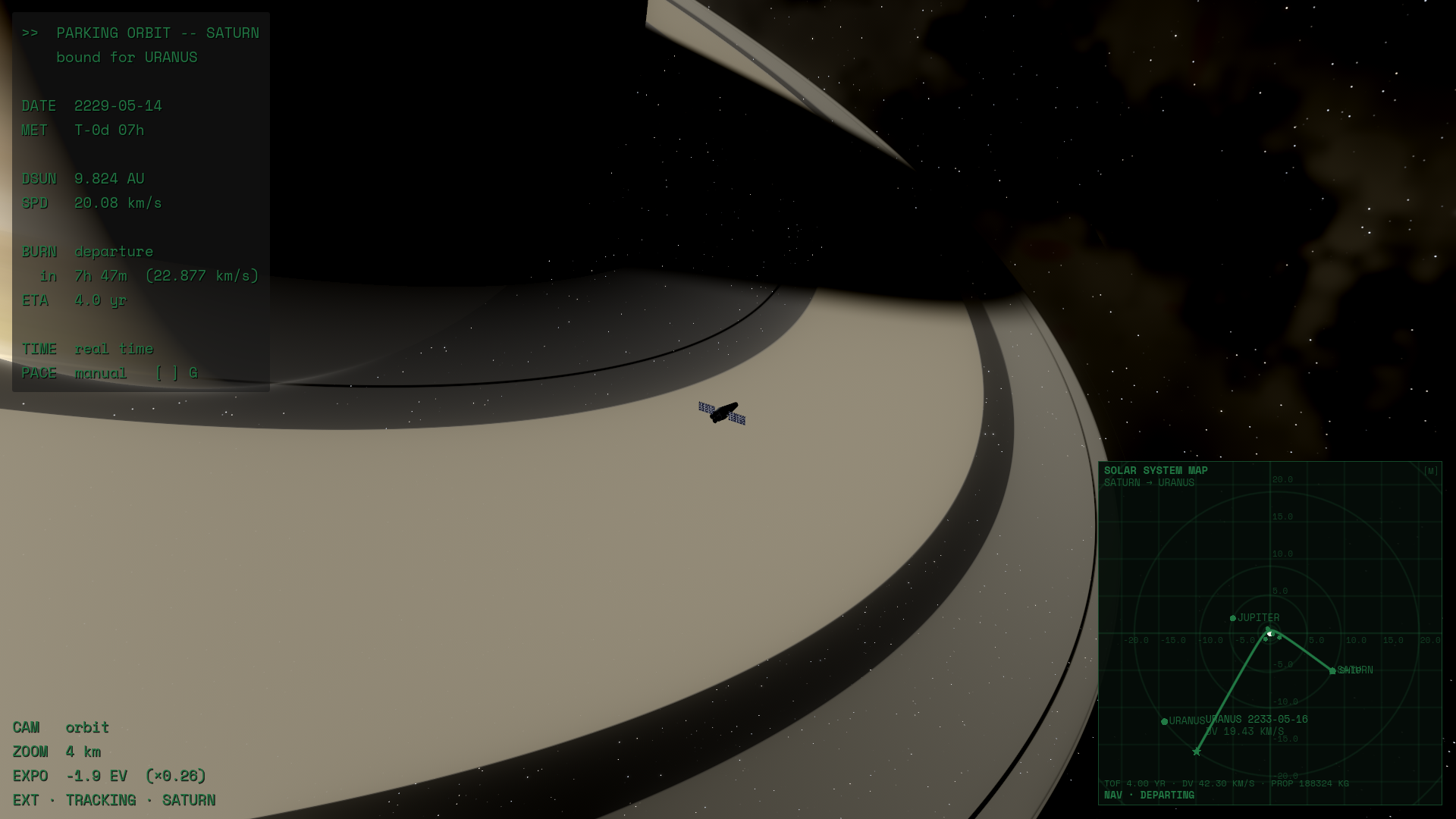
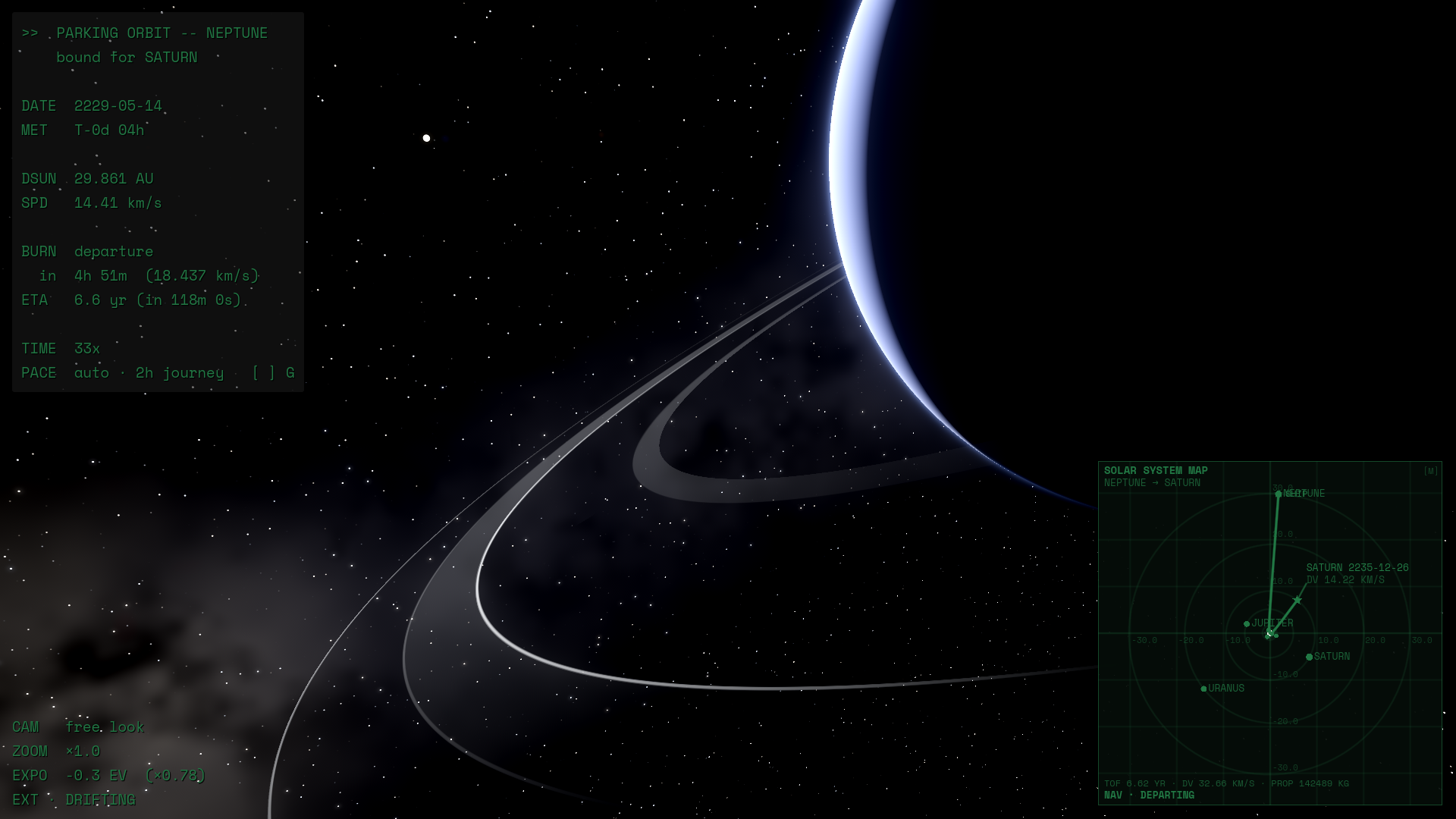
Transfer Window is a meditative idle space sim about crossing the solar system. It is the 23rd century and humanity has developed into a young space-faring civilization building colonies as far as the moons of Jupiter and Saturn. Neptune and Uranus are our hostile, untamed frontier. Pick where you are and where you'd like to be, then sit back and let the ship fly you there using real orbital mechanics, at true multi-million-kilometer scale.
It began as a small mission planner, built to add authenticity to a space FPS I was working on: a visual "Google Maps" for the solar system. It turned into its own thing.
An idle space travel sim
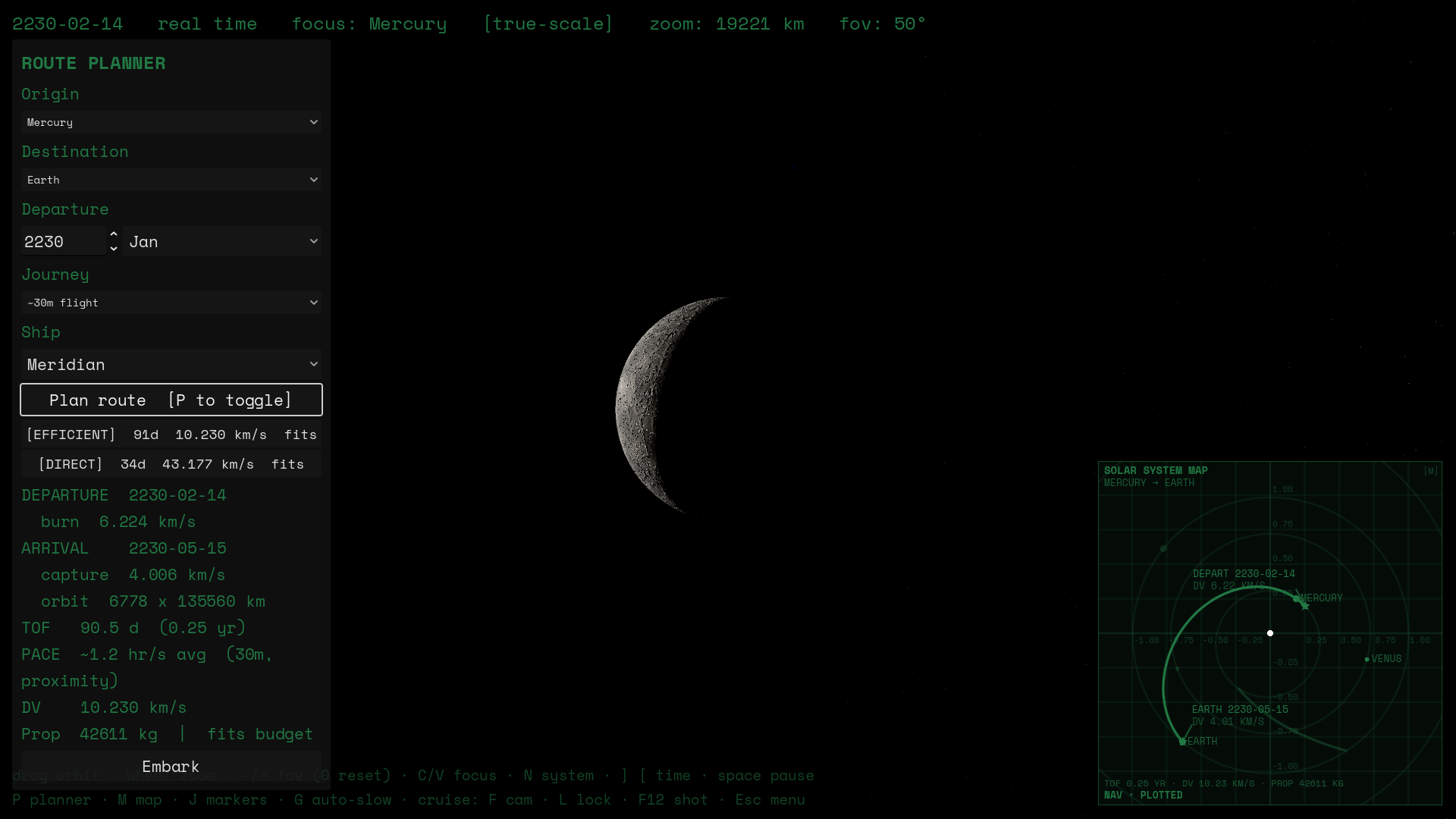
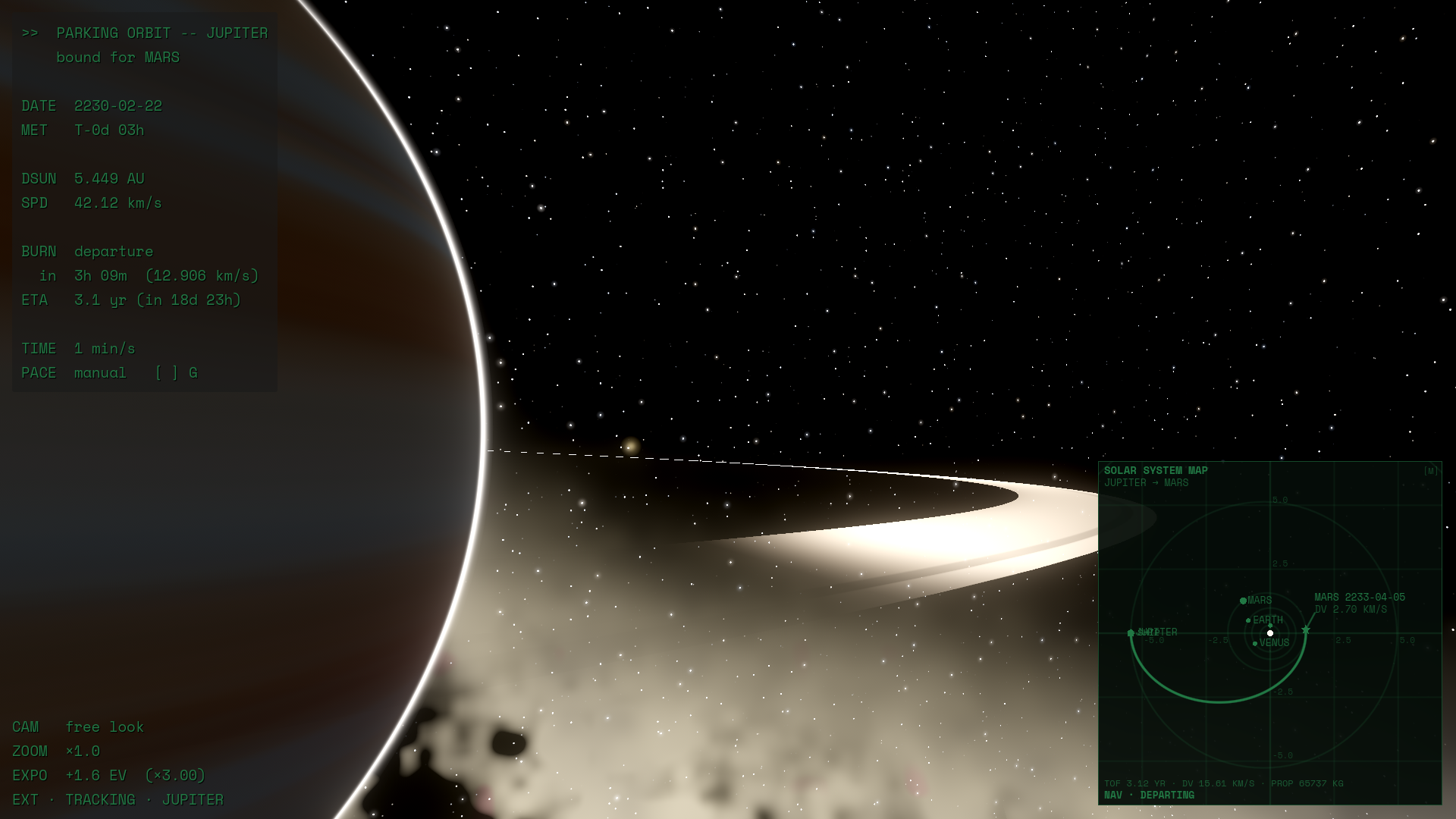
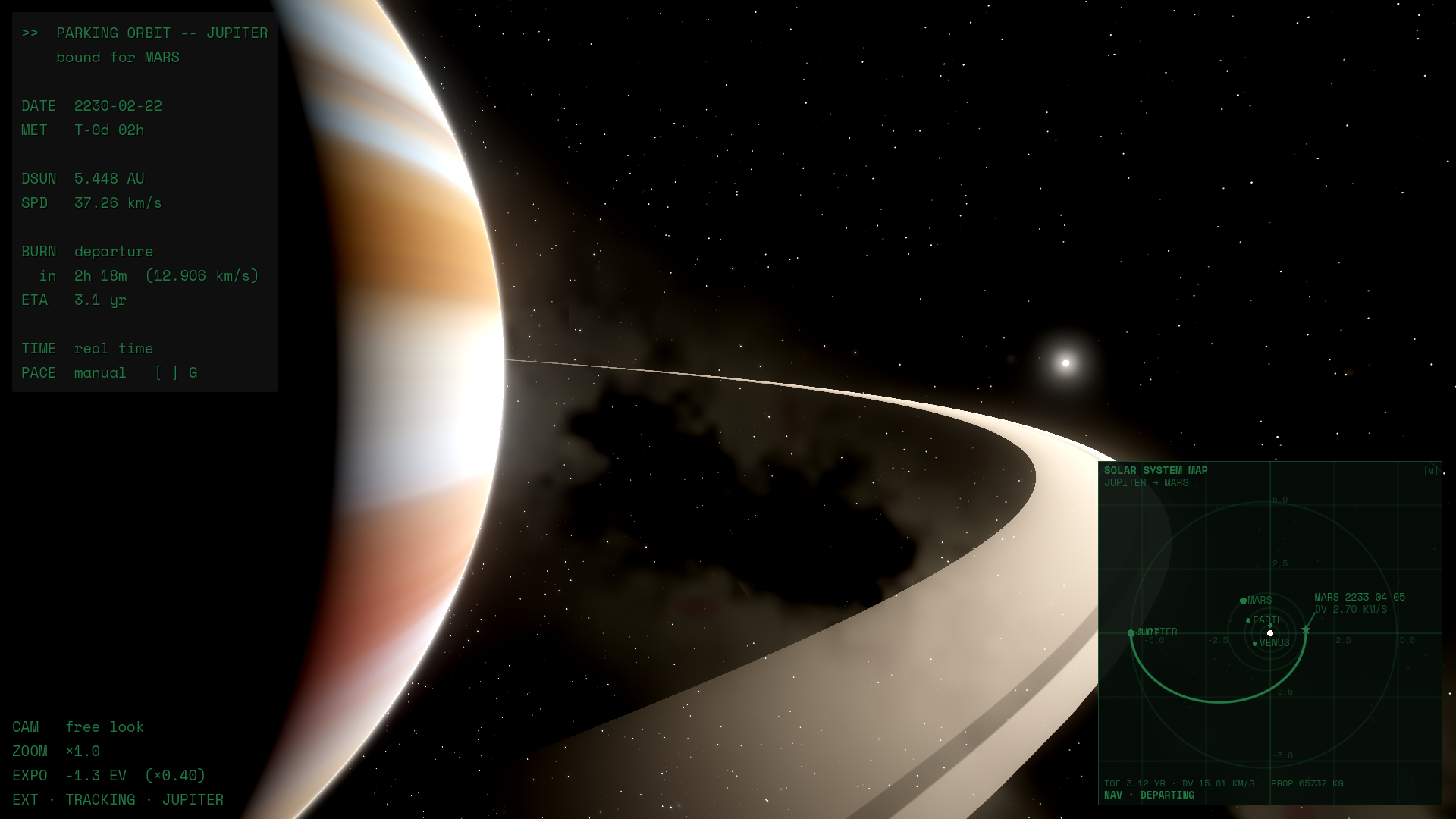
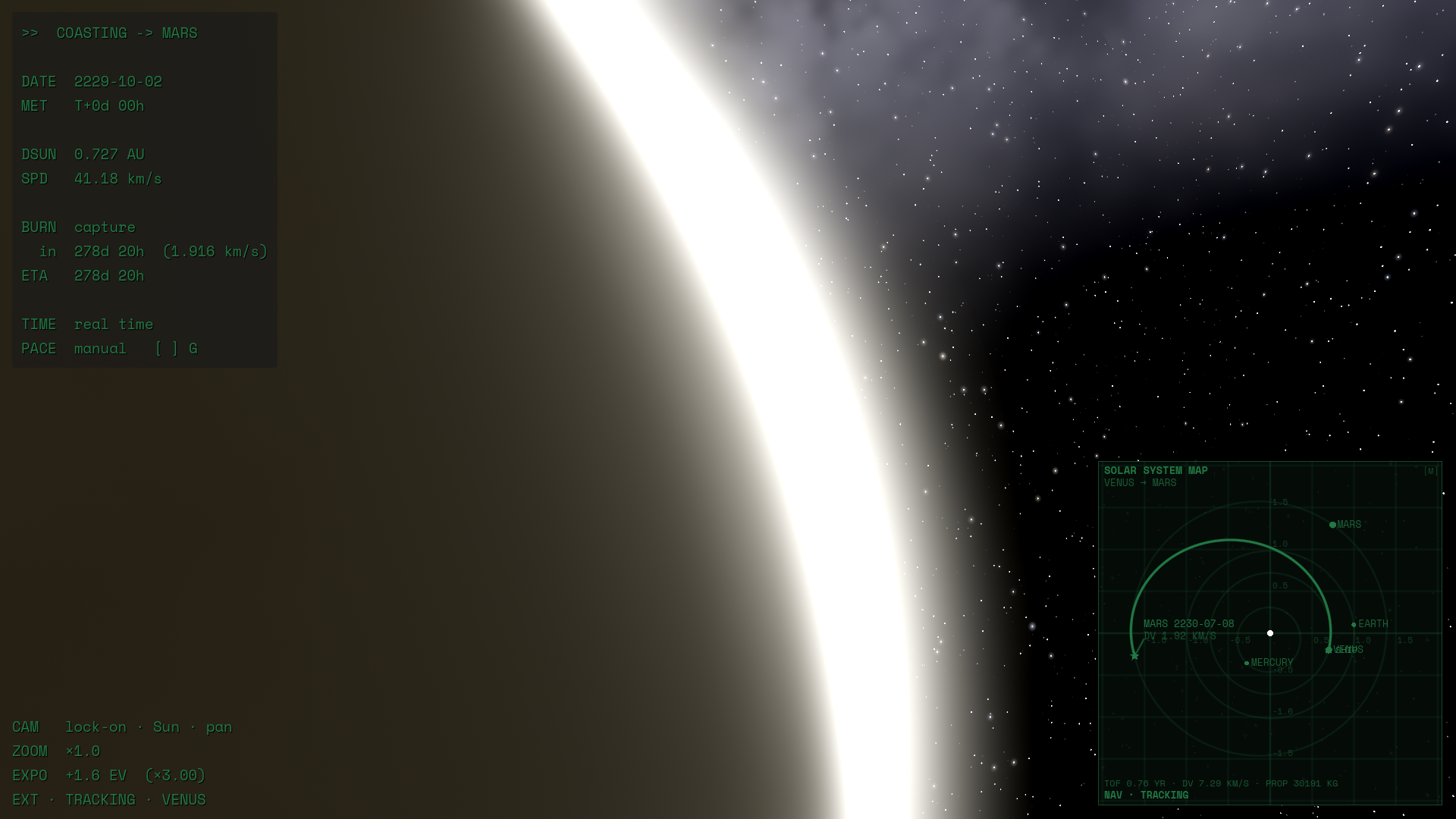
Choose an origin, a destination and a departure month. The planner solves the real transfer and offers you the most direct route your ship can afford (prioritizing time savings) and the most efficient one (prioritizing fuel savings). Departure timing genuinely matters, and some months are cheap while others are impossible. Then you embark, and a cinematic auto-camera takes over: close passes, occultations, conjunctions, the first and last sight of a world, and long drifting looks at empty sky when there is genuinely nothing to see.
A journey takes between two minutes and four hours of real time, whatever the trip takes in flight time. Time compression scales itself, so close passes slow down and empty gulfs speed up. Or, you can take direct control of the time compression and scale from real time to years per second. Though I doubt you want to attempt a ~50 year flight from Mercury to Neptune in real time...
I recommend putting on your favorite album/playlist, set the journey length to time your relaxation, and kick back and watch the solar system flow past. Or, start a long 1-4 hours cruise while working on other stuff and treat it like a little "window into space" for a little background scenery.
What's in this build
- Eight planets, plus Luna, on real orbits. Positions come from JPL's approximate (mean Keplerian) element tables, and transfers are solved with a real Lambert solver. This is the same maths a mission planner would use, not a curve that looks about right.
- One ship, the Meridian — an entry-level space yacht powered by 4 small fusion engines giving it a generous Δv that can reach any planet in the solar system at a relatively comfortable pace.
- Planets built from measured data, not just photographs. Jupiter's and Saturn's bands come from real zonal profiles, the rings are 27 bands authored in kilometers with published optical depths, and the atmospheric limb on each world is derived from its actual scale height.
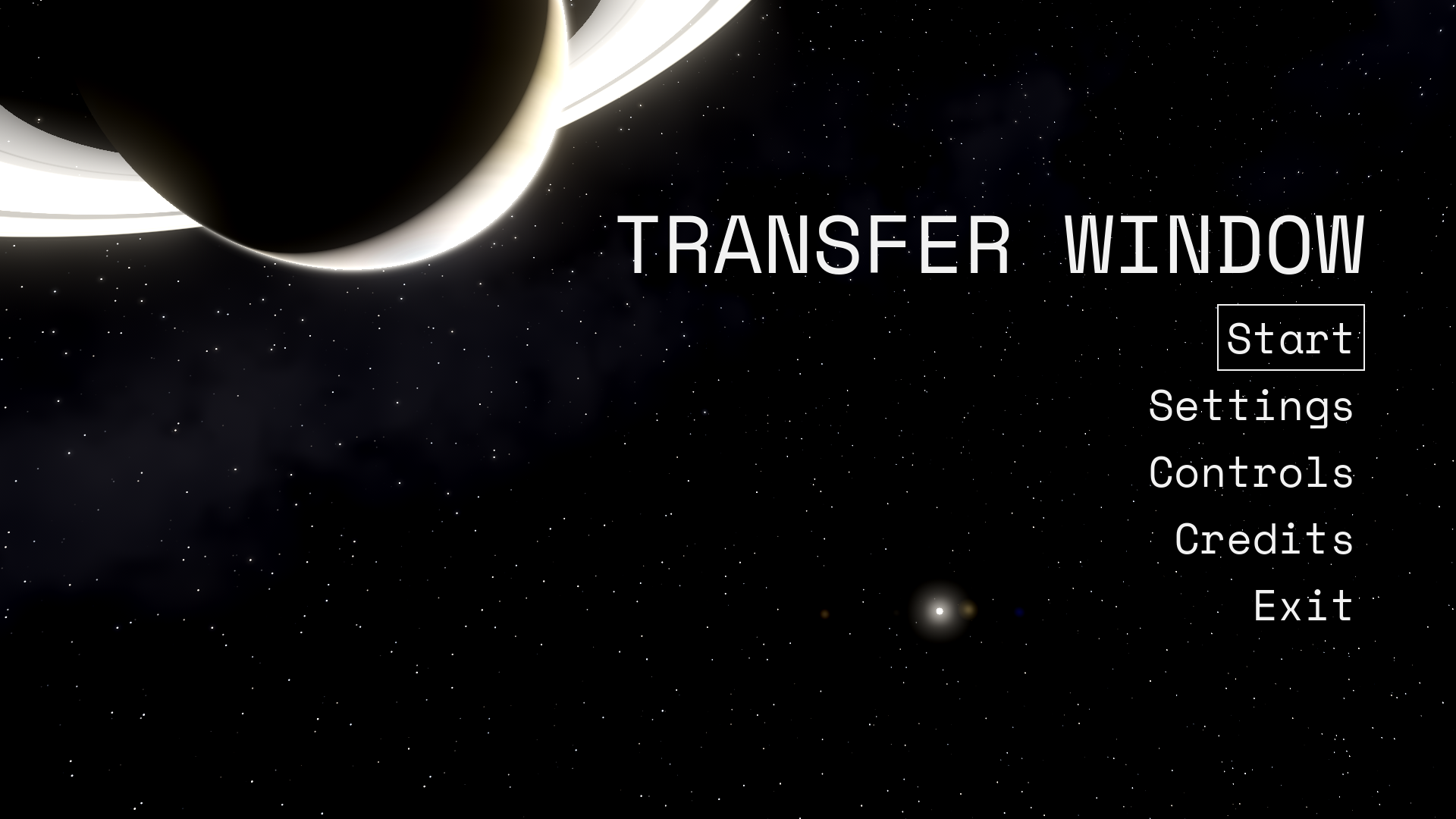
- An attract vista on the title screen. A parked orbit around a random planet with limited camera controls.
Not in this build yet: more ships (everything from futuristic hybrid chemical rockets, vintage spacecraft, futuristic fusion-powered craft, and perhaps even solar sails and nuclear pulse propulsion), moons beyond Luna, asteroids, dwarf planets, comets, and the scenic route type, orbital space stations to dock and refuel at, and more. Actual ship maneuvering, burn/RCS visuals, engine plumes, etc. This is v0.1 and it is an early one.
Graphics are largely placeholders for now (don't look at the Earth, please!). I've done detailing passes on the sun simulation, auto-exposure system meant to simulate the human eye, obsessive detail on the planetary rings, and have preliminary atmospheres based on real data. I plan to better detail the planets: slowly churning storm bands on Jupiter, cloud layers of Venus, mountains and canyons of Mars, better looking craters on Mercury and the moon, a lit up night side of Earth, etc. Realistic planetary spin and tidal locking for the Moon is yet to be implemented.
Known issues: shader clipping artifacts on many bodies and the Milky Way. Some pixel artifacts around the sun's inner halo.
Controls
Everything is playable on keyboard and mouse or on a gamepad.
| Function | Mouse/Keyboard | Gamepad |
|---|---|---|
| Camera movement | drag mouse | right stick |
| Zoom out / in | - / = | LT / RT |
| Lock next / previous body | C / V | RB / LB |
| Camera mode | F | Y |
| Lock onto a body in view | L, or click it | A |
| Slow / speed up time | [ / ] | D-pad left / right |
| Toggle direct time control | G | D-pad up |
| Route planner | P | B |
| Menu | Esc | Start |
The full list is in the game under Menu → Controls, and it is generated from the game's own bindings so it is never out of date.
What it isn't
This is not Space Engine, Elite Dangerous or Kerbal Space Program, and it isn't trying to be. The heart of it is the user experience and the simplicity: I wanted something anyone could sit down with and feel the grandeur, awe and scale of space exploration, without building rockets or fighting a simulation's menus.
Minimalistic on the surface, painstaking underneath — every number in it comes from real physical data.
Where this is going
Directions I'm building toward:
- An idle progression layer — experience, achievements, unlocks.
- A photo mode in the vein of Pokémon Snap.
- A contract-based economy, and a choose-your-own-career space sim in the vein of Freelancer — but slower-paced hard sci-fi.
- Naval combat modelled on the age of sail, 17th to 19th century, moved into orbit, with most engagements taking place beyond visual range.
v0.1 is the foundation those sit on: the orbits, the scale, and the feeling of crossing it.
Requirements
- Windows 10 or 11, 64-bit — or Linux, 64-bit (x86_64)
- A GPU with Vulkan support — the renderer is Forward+ and there is no OpenGL fallback
- No macOS build yet. It's planned.
Reporting a problem
The zip contains TransferWindow.console.exe — same game, with a console window that prints any
error. That output is the single most useful thing to send along with a report.
Credits
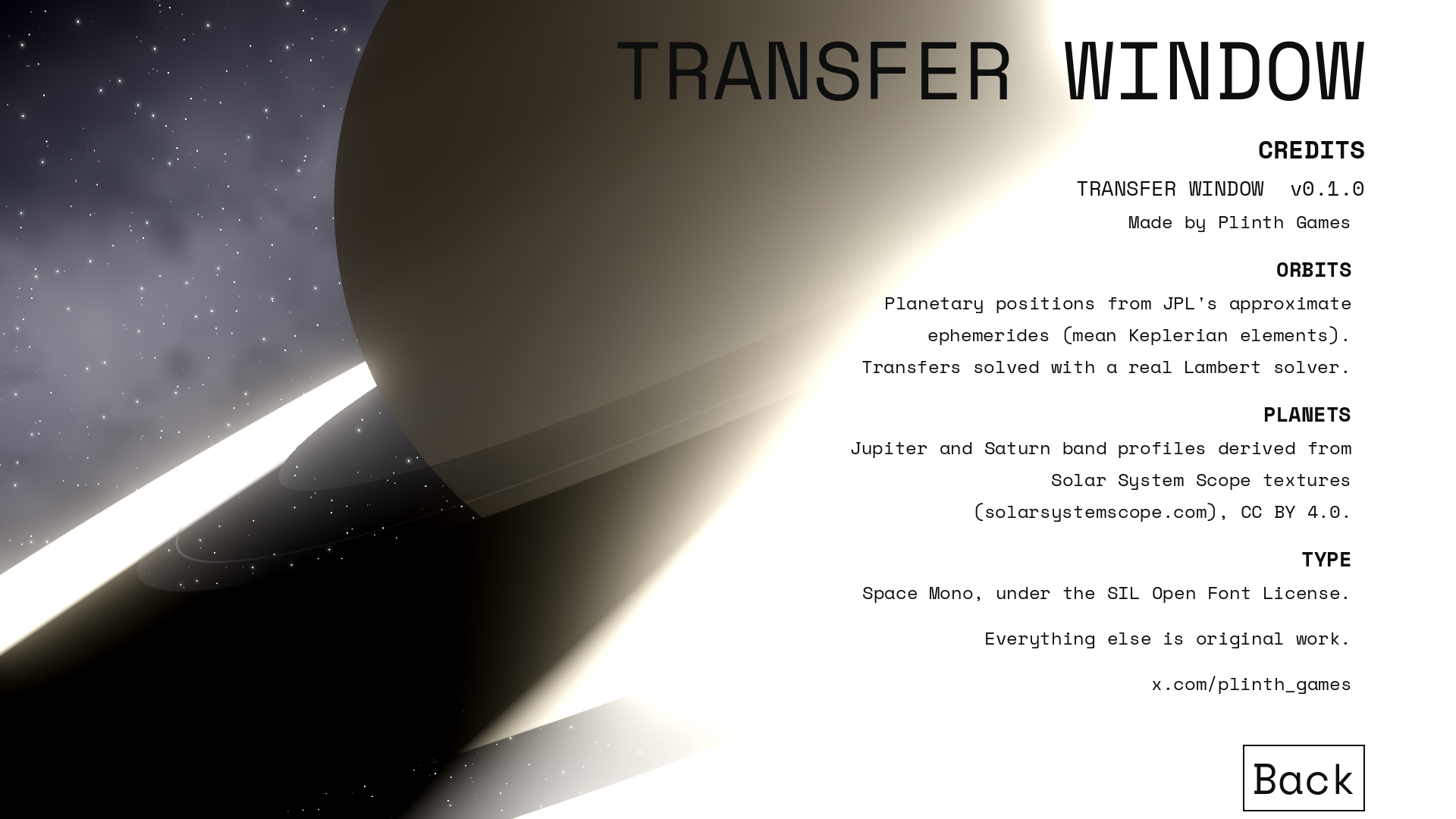
Made by Plinth Games.
- Built with Godot engine 4.5 and vibe coded with assistance from Anthropic's Claude Opus/Sonnet/Fable models.
- Planetary positions from JPL's approximate ephemerides (mean Keplerian elements).
- Jupiter and Saturn band profiles derived from Solar System Scope textures (https://www.solarsystemscope.com), used under CC BY 4.0.
- Type is Space Mono, used under the SIL Open Font License.
Everything else is original work.
Download
Install instructions
### Windows
Double-click **TransferWindow.exe**.
If something goes wrong, run **TransferWindow.console.exe** instead — same game, but with a console window attached that prints any error. That output is the single most useful thing you can send along with a bug report.
### Linux
The zip does not reliably preserve the executable bit, so mark it once:
chmod +x TransferWindow.x86_64
./TransferWindow.x86_64
**Run it from a terminal the first time.** There is no separate console build on Linux — the binary prints straight to the terminal it was launched from, and that output is the most useful thing you can send along with a bug report.
⚠️ **The Linux build has not been tested on a real machine** — it is built from the same code as the Windows one and reports a clean export, but nobody has yet run it. If you are the first, a terminal log of it failing is genuinely valuable.
Leave a comment
Log in with itch.io to leave a comment.